


Backlit trade show displays are worth the extra cost for most exhibitors who attend two or more shows per year. A backlit SEG lightbox typically costs 30–60% more upfront than a comparable non-backlit fabric display, but it delivers significantly better visibility in dim or unevenly lit exhibit halls, and reusable frames with swappable graphics usually make it the cheaper option over a multi-show lifespan. For a one-time event with a tight budget, a non-backlit display can still be the right call.
Here's how the two options actually compare, category by category.
Visibility: the biggest difference
Convention halls are notorious for uneven overhead lighting — bright near main aisles, dim toward the back. A non-backlit fabric display depends entirely on that ambient light. A backlit display generates its own: LED modules illuminate the graphic evenly from behind, so colors appear saturated and text stays readable from across the hall. In practical terms, an illuminated booth draws the eye first in a row of ten booths, and that attention advantage is the whole reason exhibitors pay the premium.
Cost comparison
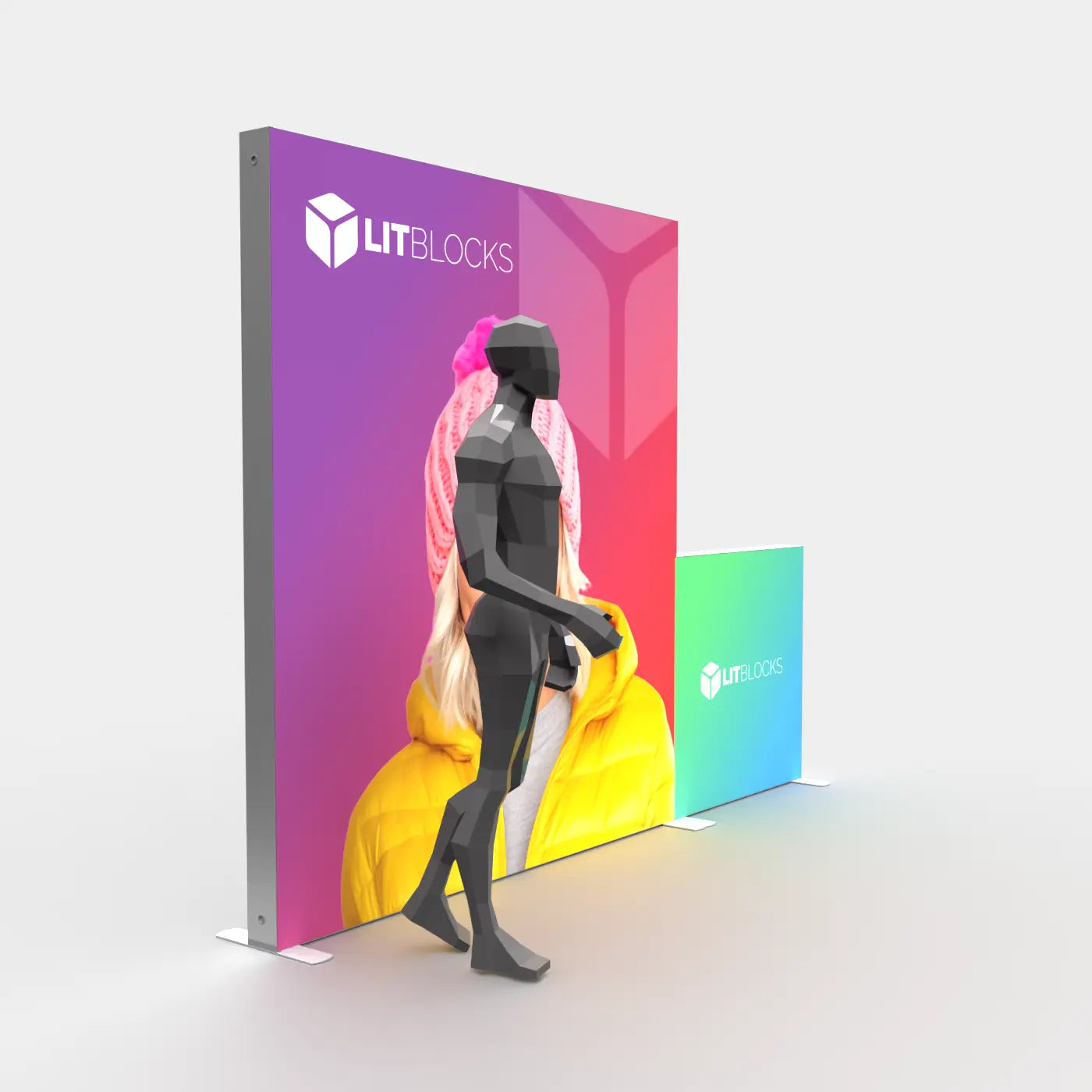
For a standard 10x10 booth, a quality non-backlit tension-fabric back wall generally runs $800–$1,800. A comparable backlit SEG wall, like the 9.8ft SEGO LitBlocks display, starts at $2,331. The gap narrows over time, though: with a modular lightbox, rebranding means printing a new SEG fabric skin rather than buying a new display, and the same frame reconfigures into different layouts — straight wall, L-shape, or arch — as your booth space changes.
Weight, setup, and power
Non-backlit displays win slightly on weight and have no power requirement at all. Backlit displays add LED modules and wiring, but modern SEG systems like SEGO LitBlocks still assemble tool-free in 30–45 minutes and run on a standard 110V outlet, drawing well under the basic 5-amp electrical package most venues sell. The added cost of a venue power drop ($100–$300 at most shows) is the main recurring expense a non-backlit exhibitor avoids.
Double-sided branding
One underrated advantage: backlit SEG frames are naturally suited to double-sided graphics, since the frame is a self-contained illuminated box. That matters for booths visible from multiple aisles, island configurations, or freestanding banner-style lightboxes placed at entrances. Most non-backlit pop-up displays are single-sided by design.
When a non-backlit display makes more sense
Choose a standard fabric display if you exhibit once a year or less, your booth is in a brightly lit area near windows or main entrances, your budget is firmly under $2,000, or you need the absolute lightest kit for air travel. There's no reason to pay for illumination you won't benefit from.
When backlit is the better investment
Choose a backlit display if you attend multiple shows per year, compete in crowded halls where standing out matters, plan to rebrand periodically (swappable graphics amortize the frame cost), or want one modular system that reconfigures for 10x10 and 10x20 spaces.
Frequently asked questions
How much more does a backlit display cost than a non-backlit one?
Expect to pay roughly 30–60% more upfront. A 10x10 backlit SEG wall starts around $2,331 versus $800–$1,800 for a comparable non-backlit fabric wall.
Do backlit displays work in brightly lit venues?
Yes — backlighting still deepens color saturation in bright halls, though the visibility advantage is largest in dim or unevenly lit spaces.
Are backlit displays harder to travel with?
They're moderately heavier due to LED modules, but SEG lightbox kits pack into wheeled cases and assemble without tools, so most exhibitors handle transport and setup themselves.
Can I convert a non-backlit display to backlit later?
Generally no — backlighting requires a frame designed for internal LEDs and light-diffusing fabric, so it's more cost-effective to choose backlit from the start if you expect to want it.

Share:
How Much Does a Backlit 10x10 Trade Show Booth Cost? (2026 Pricing Guide)
How Do You Ship a Trade Show Lightbox? Luggage, Parcel, and Freight Explained